
Indigo dyeing in Thailand
ndigo dyeing in Thailand is a handicraft passed down from generation to generation.
The indigo journey begins with growing the plants at home and waiting for the harvest. The harvested indigo is then fermented and mixed with ash, red lime, and other ingredients to create an indigo paste. This paste can be stored in containers like earthen jars for a year or more. The portion of the paste intended for the dyeing vat must first be prepared or "seasoned." Setting up an indigo vat requires ash, sugar, tamarind paste, and red lime—some of which are the exact same ingredients used in Thai cooking.
While different regions might use slightly varying ingredients, they must always carefully manage the acidity and alkalinity that affect the vat. An indigo vat demands consistent care; it must be regularly "fed" and replenished with microorganisms to produce a beautiful, vibrant color that binds easily to the fabric. Without proper maintenance, the indigo vat will die.
 Ingredients used for setting up the indigo vat and seeds
Setting up an indigo vat to produce a beautiful color is quite challenging. It requires a great deal of knowledge and expertise, and it also depends on numerous external factors such as temperature, humidity, water quality, and many others.
 A perfect indigo vat ready for dyeing fabric
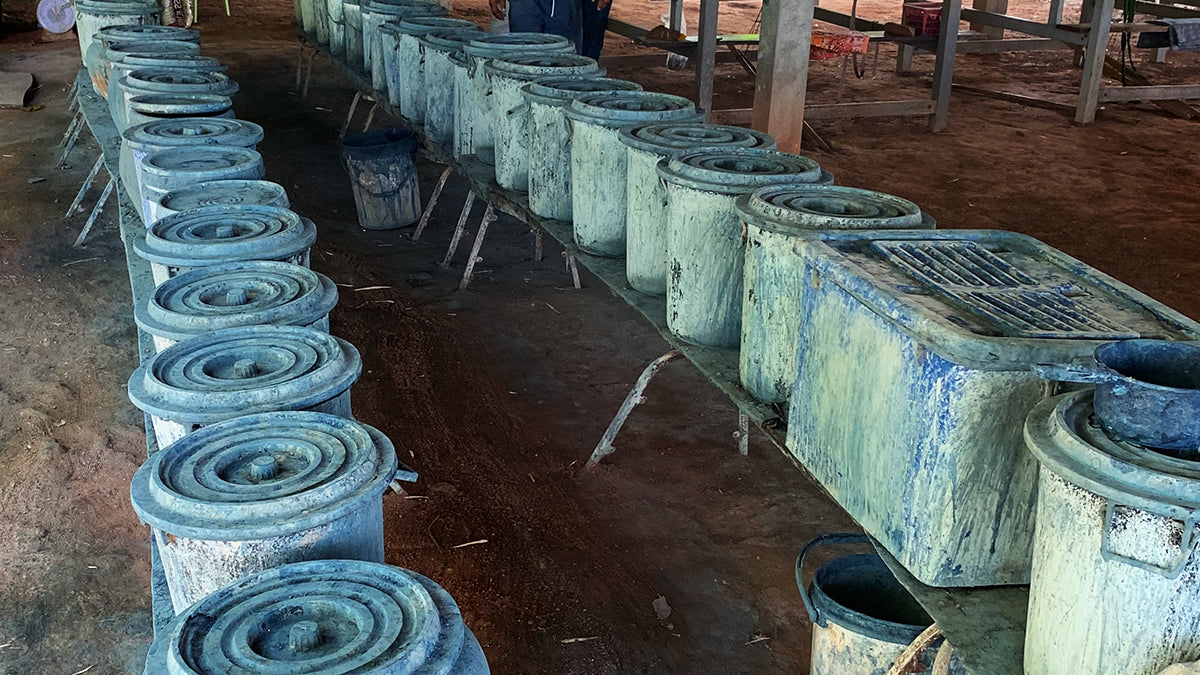
The intensity of the resulting indigo color depends on the number of vats used during the dyeing process. Sometimes, it can require dyeing the fabric in up to 10 different vats, or dipping it multiple times, to achieve a very deep and dark shade.
 To achieve a deep shade, the fabric must be dyed multiple times.
Indigo dyeing differs from other natural dyeing methods in that it does not require a mordant (a dye-fixing agent). Furthermore, it can be done as a cold dye process, eliminating the need for boiling that other methods require. Once the desired color is achieved, the fabric simply needs to be washed with a gentle laundry detergent.
Authentic, naturally dyed indigo fabric will retain the unique scent of indigo within its fibers. You can verify if a piece is genuinely dyed with natural indigo by simply holding the fabric close to your nose and taking a gentle breath to catch the scent. This aroma might even remind you of lush, fertile countryside farmlands.